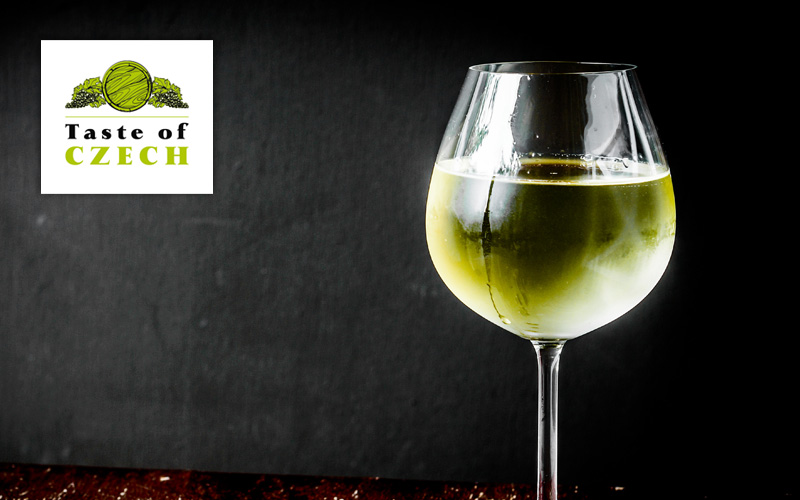
White Wines
White wine is a natural dry wine, made from white grapes and some black grape varieties. The vast majority of today’s white wines is made for immediate consumption. The younger the white wine, the better. All white wines are best served chilled.
Chardonnay
Original medium early variety from France, probably originated from cross breeding of Pinot Gris with a variety Heunisch. Chardonnay is the most common wine with special attributes, from the cabinet to the grape selection and ice and straw wine.
Characteristics of the wine:
Green or golden colour with aromas of fresh apples. The more mature wines smell of honey and hazelnuts. From the warm areas of tropical nature we get aromas of mango, cream, banana, pineapple, melon and sometimes honey and caramel.
Matching food:
Cold dishes, seafood, fish, poultry.
Hibernal
Hibernal is a late white stum, interspecific variety. It was created in Germany by crossing Riesling and Seibel. The variety is now popular on the east coast of the USA, it is not yet significantly expanded in the Czech Republic.
Characteristics of the wine:
Typical varietal wine has a greenish colour, the bouquet is intense, pleasantly fruity, full of flavour, very extractive, typically spicy. This variety of wine has a higher acidity, grape selections have subtle harmony. You can smell and taste blackcurrant, gooseberry, pineapple, grapefruit, blood orange, kiwi, apple, pear, apricot, peach, delicate floral notes and sometimes subtle bitterness afterwards. The wine is suitable for archiving.
Matching food:
Cold dishes, seafood, fish, poultry.
Irsai Oliver
Strongly aromatic Hungarian variety, bred specifically for direct consumption. Wine of this variety excels with its distinct muscat flavour and aroma and its golden-yellow colour.
Characteristics of the wine:
Pale yellow colour, Muscat aroma, delicate spicy flavour, lower acidity. It has a typical nutmeg-spicy aroma and low acidity after full maturation.
Matching food:
Sweet dishes, desserts.
Müller Thurgau
Famous medium early variety created in Germany in 1822. The author is professor Müller from a Swiss canton called Thurgau, hence the name. It has been grown for over sixty years in the Czech Republic and now belongs to three varieties with the most coverage.
Characteristics of the wine:
The colour is yellowish. It smells of peach and grape, and little bit of spice. Taste is slightly flavourless, with peach and grape flavours, lower acidity and fine tannins.
Matching food:
Cold dishes, seafood, fish, poultry.
Moravian Muscat
This original Moravian variety cultivated by cross breeding of Muscat Ottonel with Prachtraube was registered in 1987. Moravian Muscat became the most popular newly cultivated variety in its homeland, the Czech Republic. The most vineyards with Moravian Muscat can be found in the wine subregion of Moravian Slovakia.
Characteristics of the wine:
The colour is greenish yellow. Aroma: significant smell of grape, sometimes spice. Taste is flatter, again it significantly tastes of grape, with lower acidity and less body. Fuller Muscat wines with residual sugar are produced in a years with very good conditions.
Matching food:
Fine pâtés, slightly sweet desserts.
Neuburg
Neuburg is an Austrian variety probably developed from accidental crossing of Sylvan Green with Red Veltliner. This variety started to be cultivated in Moravia after 1915. It accounted for 4% of Moravian vineyards seventy-five years ago, it now covers 2% of the vineyard areas.
Characteristics of the wine:
The colour is more vibrant, yellow to golden. The aroma is spicy and mineral, sometimes with a hint of fruit. The taste is highly extractive, with optimum acidity. Full-bodied, spicy taste at the end. Suitable for longer storage.
Matching food:
Cold dishes, fish, poultry.
Pálava
Late variety was bred in the 1950’s. The author is Ing. Joseph Veverka, who dealt with the variety at the Breeding Station Great Pavlovice and Wine Breeding Station Perna. Most Pálava grapevines are grown in Mikulov region.
Characteristics of the wine:
Golden yellow colour, tramín (traminer) scent of roses is complemented by aromas of vanilla. The wine is full, with lower acidity, supple and with a long lasting after taste.
Matching food:
Cold dishes, fish, poultry.
Pinot Blanc
Pinot Blanc (Pinot Bianco) is a French variety also grown in the Czech Republic for many centuries.
Characteristics of the wine:
The colour is golden yellow. The aroma is fresh, slightly fruity and floral, slightly spicy, with bread yeast. The taste is very lusciously full, with a gentle hint of bread and fruitiness, with optimum acidity and fine tannins. Suitable for longer storage.
Matching food:
Cold dishes, seafood, fish, poultry.
Pinot Gris
Pinot Gris (Pinot Grigio, Ruländer, Tokayer) is a late French variety grown in the Czech Republic since the 14th century.
Characteristics of the wine:
The colour is lightly golden. The fragrance has a hint of bread and little bit of spice. The taste is very lusciously full, with a gentle hint of bread and fruitiness, with a slightly lower acidity and fine tannins. Suitable for longer storage.
Matching food:
Cold dishes, seafood, fish, poultry.
Rhine Riesling
It is thought that this variety originates from the northern part of the river Rhine. It has then been expanded onto our land in the 17th century. It is mostly grown in Bohemia and wine subregion Moravian Slovakia.
Characteristics of the wine:
The colour is lemon yellow to golden. The aroma is very fresh, with a wide range of flavours from lime blossom, flowers of fruit trees, wild flowers to roses, slightly spicy. The older vintages have a significant aromas of minerals and petroleum. The taste is very lusciously rich, with high acidity keeping the wine taste fresh. Full-bodied, spicy taste in the end. Suitable for longer storage.
Matching food:
Cold dishes, seafood, fish, poultry.
Welsh Riesling
This late grape variety has not got anything in common with ‘Rhine Riesling’ apart from the name. It is grown in the South East of Europe, particularly in Hungary, the former Yugoslavia, Bulgaria. It is becoming less important, but so far it is the fifth most commonly grown variety along with Blaufränkisch.
Characteristics of the wine:
Colour is citrus yellow to golden. The smell is very fresh, with a dominating acidity, slightly spicy. The taste is highly extractive, fresh, with higher acidity keeping a young impression for longer. Most medium-bodied and lighter, spicy taste in the end. Suitable for longer storage.
Matching food:
Cold dishes, seafood, fish, poultry.
Saphira
Is an interspecific variety designated to a white wine produce. It was created by cross breeding of Arnsburger and Seyve Villard in Germany in 1978.
Characteristics of the wine:
Wine with more straw colour with a highlights of old gold. It strikes us with a direct, penetrating scent, which resounds in tones of fresh oranges and dried garden fruit. The taste is full, dry and very fruity with lower acidity, with an overripe honey after taste.
Matching food:
Cold dishes, seafood, fish, poultry.
Sauvignon
French variety, possibly a cross breed of Chenin Blanc and Traminer. It is grown in most parts of the world. Its vineyard coverage has been expanding in the last few years and it is now being grown even in a countries where it was less common, ie Germany.
Characteristics of the wine:
The colour is pale yellow to greenish. The smell is very aromatic with grass and nettle tones in the less ripe wines. The best Sauvignons have an aroma of elderberry, peach, gooseberry and currant. The taste is highly extractive, corresponding with the considerable aroma and harmonious acid. Full-bodied, spicy taste in the end. Suitable for longer storage.
Matching food:
Fish, poultry, red meat.
Solaris
Solaris is a very early grape variety that was created in 1975 in Germany. It is less prone to damage by fungal diseases and therefore it needs only 2 sprayings per year. Thanks to this it is great for an organic viticulture.
Characteristics of the wine:
Solaris are full, high quality wines, often with residual sugar. It is fruitier and more floral with a very subtle nutmeg in the higher qualities. The taste can sometimes detect a tone reminiscent to pineapple and hazelnut.
Matching food:
Fish, poultry, red meat.
Tramín (Traminer)
The origin is not clear. According to a genetic analysis it came into being by free cross breeding of forest vine and then contributed significantly to the creation of European wine varieties. These are therefore the oldest varieties. It was grown in the Czech Republic throughout the 20th century, but always only in a limited numbers.
Characteristics of the wine:
The colour is deep yellow to golden. The smell is very aromatic, containing lily and acacia aromas. The taste is highly extractive, strongly floral, with lower acidity. Full, spicy taste at the end. The well-ripened grapes are suitable for longer storage.
Matching food:
Fish, poultry, red meat.
Green Veltliner
This variety’s place of origin is unknown. The genetic analysis suggest that it came into being by a coincidental pollination of Sylvan Green by a Red Veltliner. It was brought to Czech Republic from South Austria. The most of this grapvine is grown in Mikulov subregion.
Characteristics of the wine:
The colour is pale yellow. The scent is neutral, bread-like and slightly spicy. The taste is very extractive, bread-like, with lower acidity. Mostly medium-bodied, spicy taste in the end.
Matching food:
Cold dishes, seafood, fish, poultry.